
Busted Mugshots in Louisiana Archives
Louisiana has no all-parish historical mugshot collection. Start statewide with the Secretary of State's Archives. That office describes the state collections and runs an online catalog. Its holdings can point to records that state agencies transferred over time. Still, the Archives is not a warehouse for every booking image. Local arrest files stay with the creating agency. Moves happen only under a documented schedule.
Search by record series and agency, not just a person's name. An old prison register may list dates, physical details, offenses, sentence terms, and transfers. It may hold no photograph at all. A catalog entry only proves a collection exists; it does not promise a digitized or open booking photo for a named person.
Louisiana Historical Mugshot Records
Several real collections can support a long-range search. Their scopes differ, though. These are historical research sources, not a promise that each person has a public booking photo. Read the collection description first, then ask the holder what names, dates, and documents it can search.
| Collection or archive | What the research describes | How to use it |
|---|---|---|
| Louisiana State Archives | State agency records, corrections collections, photographs, documents, and other historical materials. | Use the official collections page and catalog; ask for the record group or series. |
| Louisiana State Penitentiary Records, 1866–1963 | Seven indexes and 36 convict registers from the State Archives, with names, physical descriptions, marks, offense, term, dates, and transfers. | Search the described register collection. Its description does not say it contains booking-photo images. |
| Angola Museum collection documentation | Thousands of artifacts, photographs, documents, oral histories, and recordings about Louisiana State Penitentiary. | Ask the collection holder about rights and access; this is not an arrest-photo index. |
| The Angolite digital collection | A State Library resource on prison and corrections history. | Use it for historical context, not as a current arrest roster. |
| New Orleans City Archives police records guide | A city archive's documented holdings include digitized mugshots, Bertillon cards, and arrest records, distinct from NOPD case files. | Ask the City Archives about its local holdings; do not generalize this collection to other parishes. |
The prison-register collection traces custody and corrections history across its stated era. Do not mistake it for a mugshot collection. The same goes for every format. An institutional portrait, a Bertillon card, a newspaper image, and a booking photo each come from a different source and serve a different purpose.
How Long Louisiana Busted Mugshots Remain
Louisiana's three-year rule is a floor, not a promise. It does not guarantee a surviving image. Under R.S. 44:36, public records generally must be kept at least three years from creation when no other approved schedule controls. The statute carries its own schedule and disposal rules. Three years is a retention minimum, not a publication window. Nothing in it grants access to a particular image.
The Secretary of State's retention-schedules page explains the process for state agencies. Agencies submit approved schedules and renew them on the stated cycle. So a booking photo could be retained, transferred, restricted, or lawfully destroyed under its custodian's schedule. Sheriff offices, municipal police, courts, and contractors may not share one timeline. Ask the agency which schedule applied. Ask whether the record was transferred or disposed of.
Absence from an online roster proves nothing. Live custody tools show who is in custody now, not which old records sit in agency storage. The reverse also holds. A digitized history item can stay accessible even after a current roster entry vanishes.
Note: Ask the record custodian for the schedule and disposition history before concluding that a missing photo was destroyed.
Louisiana Booking Books and Busted Mugshots
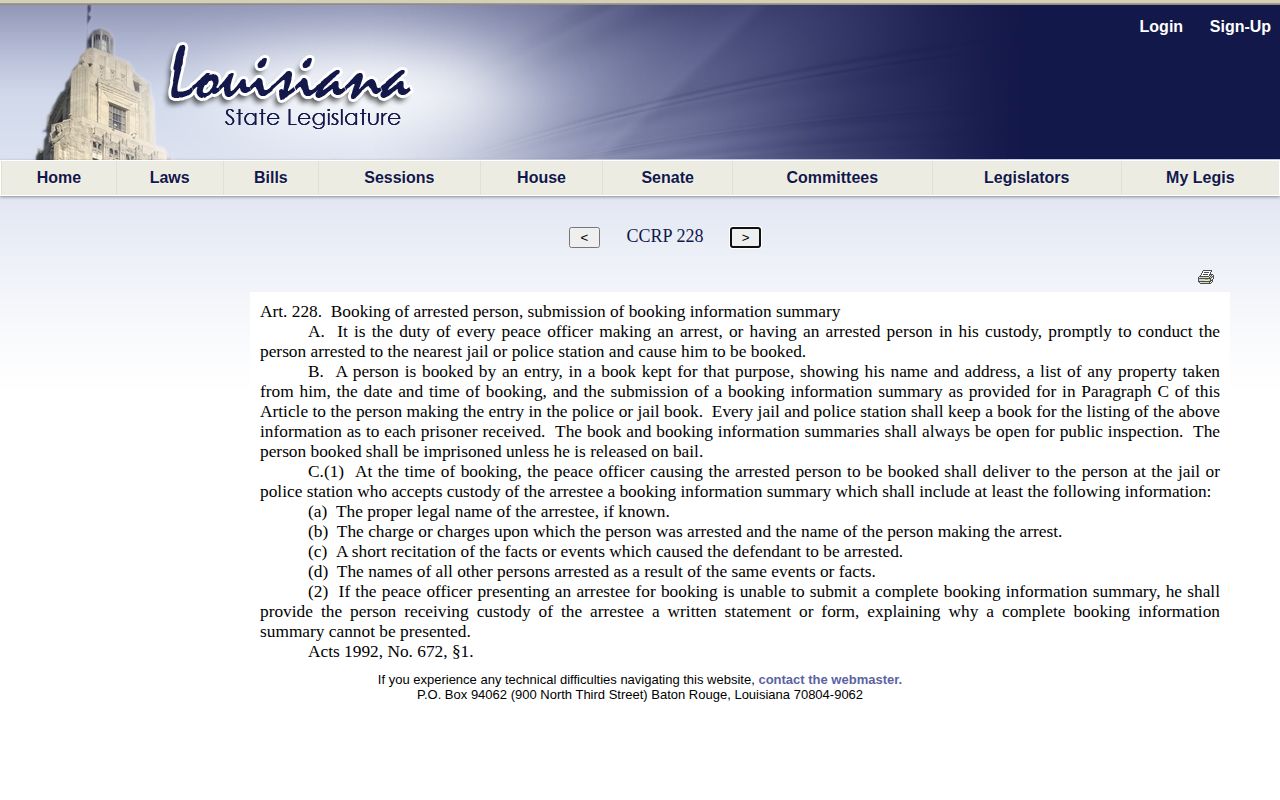
Louisiana's booking-book rule separates the written arrest record from the photo. C.Cr.P. art. 228 makes the booking book or booking information summary open to public inspection. The summary lists the arrested person's legal name. It also covers the charges and the arresting officer. A short account of the events goes in as well. Others arrested in the same event appear too. The rule says nothing about survival, though. It does not promise that old books still exist, that photos are attached, or that a live roster keeps past entries.
For an old arrest, request the book or summary plus any separate photograph. Custodians may keep those records in different systems. If the entry exists but the image does not, the public-record rule cannot conjure the missing photo into existence.
Request Louisiana Busted Mugshot Records
Narrow the request before contacting staff. A vague “mugshot” ask can pull the wrong collection. Give the person's name plus spelling variants. Add the likely agency, an approximate year range, and the parish or city. Include a booking, court, or case number. State what you want. It might be a booking image, a register entry, a police record, or a court file. A series title or record group lets archivists check the right place.
The Louisiana State Archives online catalog is the route for historical collection descriptions. Its entries point to likely holdings. They do not confirm that an item is digitized or viewable from afar.
- Identify the agency that created the record and the approximate date. Ask that custodian whether a photo, booking book, or file exists and what schedule applies.
- If the agency says a record moved to the State Archives, search the catalog by agency and collection terms. Ask for the record-group or series name rather than a general mugshot search.
- Contact the Archives Research Library with the collection title, name, date span, parish, and any case number. Ask whether staff can search it and whether the material is digital, microfilmed, or available only onsite.
- Check the Archives forms and fee schedule for current research and copy charges, including separate treatment for existing photo collections.
- Use the Archives contact page for current hours and delivery routes. Confirm the current address there because official pages can show different facilities.
The Archives sets its own fees for research or copies. Paying does not promise the collection holds the image. A photo that was never transferred, lawfully destroyed, or placed under restriction cannot be produced. The catalog cannot reach it either way. Keep the response on file. A later request can then name the same series and record custodian.
Louisiana Court Files Are Separate
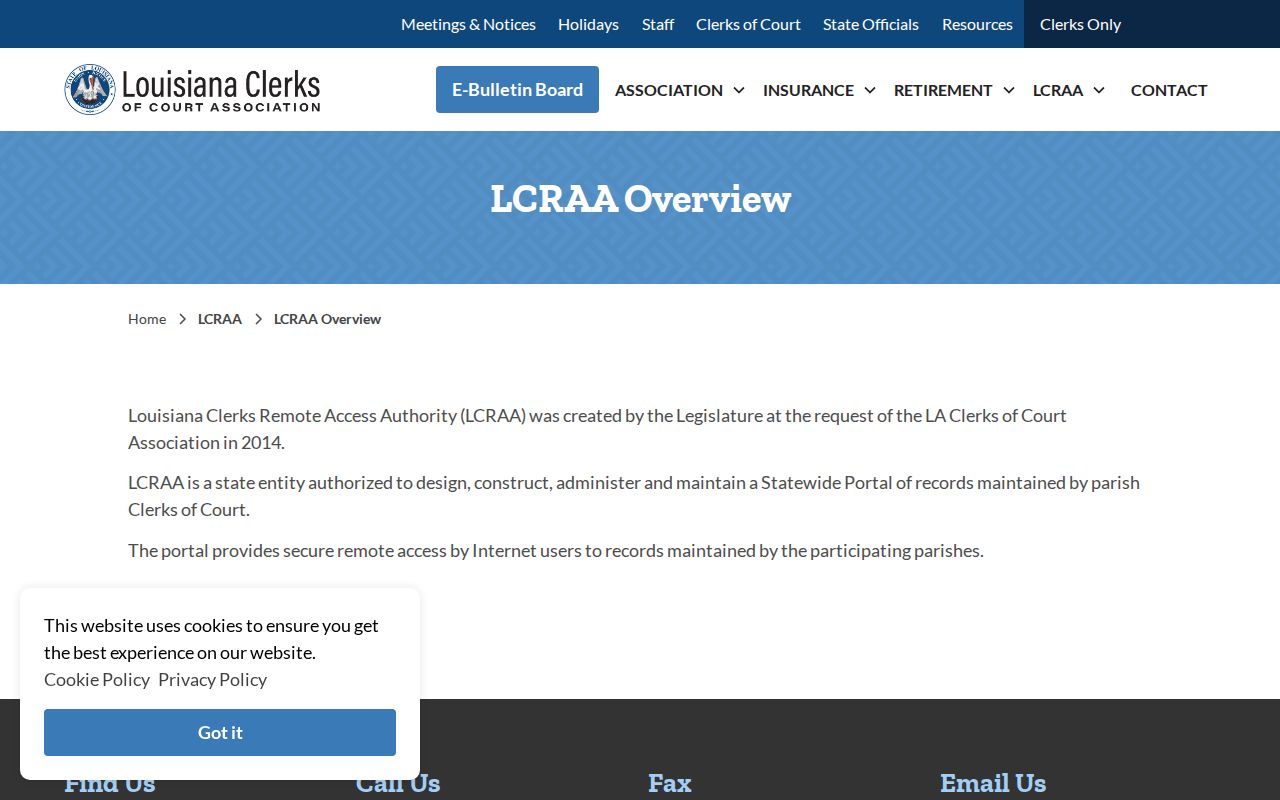
A historical case file and an arrest photo are held for different reasons. Louisiana keeps them separate, and for good reason. The state's remote clerk network connects participating parish court services. From there, eClerksLA opens a statewide portal into them. Coverage, accounts, fees, date ranges, and document access all differ by parish. The Louisiana Clerks' Remote Access Authority describes its own role as a portal to participating clerk records. It is not a single database with uniform historical coverage. A docket can confirm a charge or a disposition. It is not an archive of every booking image. For the record itself, ask the parish clerk which court file remains available. Also ask whether the case is sealed or expunged.
Expungement and Louisiana Mugshot Access
Louisiana's expungement law separates public access from physical destruction. Under C.Cr.P. arts. 971–973, expungement pulls a record out of public view. The statute's definition covers photographs and other arrest-related material. Nothing in it requires the record to be destroyed. Agencies named in the law can keep access for authorized justice functions while the public page goes dark. That gap explains a missing old image. A sealed or expunged record may still sit in restricted agency custody even after the public search stops showing it. A separate news story, an independent republication, or a search-engine copy may need its own correction request. Each copy's legal status turns on its custodian. The expungement order that applies matters just as much.
Recent Records Versus Louisiana Archives
Recent Louisiana bookings usually sit with the arresting agency or the parish custody system. Older materials can land elsewhere. A court may hold them. So may a collection that received a scheduled transfer. The roster window and photo policy vary by parish. For current custody or a fresh booking, start local. The Louisiana parish directory reaches local coverage, and the statewide arrest-record overview lays out the lookup order. For an older event, ask the creating agency first. Confirm the record still exists. If the agency names a transfer, search the Archives catalog for the series. If it says disposal under an approved schedule, no online catalog can bring the record back. If the record is restricted, ask the custodian which access route applies, because age alone never makes a file public.