
Are Louisiana Mugshots Public?
So, are Louisiana booking photos public? Sometimes. The law here splits the question in two. A booking record has the clearer path. Louisiana's criminal procedure code opens the booking book and its summary to inspection. The Public Records Law also treats listed booking details as public. The photo itself is different. State law sets conditions before an agency may release an image. So a public entry does not guarantee the picture.
What actually happens depends on the custodian and the case. Some parish portals show booking photos in a detail view. Others post live rosters with names and custody fields but no images. A city arrest might sit with the city department, the parish jail, or a third custodian. Someone released from jail can vanish from a live roster fast. The booking record still stays with the agency that made it, though.
Each tool answers a different question. A roster shows who is in custody now. A booking record shows what the agency logged at intake. A court file shows how the charge ended. A disposition is simply the court's recorded result: dismissal, acquittal, plea, or judgment. These are not interchangeable records, and knowing which one you need saves real time.
Louisiana's Article 234 Rules
Louisiana Code of Criminal Procedure Article 234 spells out what counts as a booking photograph. It means a still, nonvideo image. Law enforcement makes it for identification after an arrest. It also applies while someone sits in an agency's custody. The statute also names a certain kind of site. That is a publication charging fees to take photos down. It can also be one that profits mainly from booking photos and ad revenue.
The current Article 234 text sits alongside the enrolled 2024 Act 281. That act rewrote how agencies handle releases. Read the two together.
After Act 281, an agency has no free hand. Release is allowed only in listed circumstances. A fugitive photo can go out when publication helps catch the person. An imminent threat counts when release can reduce it. A judge may order publication tied to a legitimate interest. A conviction, guilty plea, or a pending or reasonably expected criminal case also qualifies. So do specified offense categories, a bail surety agent's request, and investigative needs. The exact statutory terms control. Anyone relying on a blanket claim that is skipping real limits.
Article 234 adds duties on top of that. The agency must give the subject, or that person's lawyer, a copy on request. Any photo an agency publishes has to carry the words. That is, unless there has been a guilty finding or conviction. Good-faith mistakes get protection too. A public agency faces no civil liability. That holds for a photo released by error or inadvertently in good faith. Verify who is actually shown.
Three Louisiana Acts
Three legislative steps built today's framework. Act 494, passed in 2022, limited many pre-conviction photo releases. Act 303 followed in 2023 and changed how that scheme worked.
Why so much movement? Privacy and public safety pulled lawmakers in different directions. So did identification needs and the lasting harm an arrest can cause when no conviction ever comes. Lawmakers changed a statute; no court ruled that every photo belongs online. The 2024 act is a policy choice, not a judicial ruling. No reported Louisiana appellate or federal decision has struck down the current Article 234, though a lower-court dispute or a later case remains possible.
The lesson is practical. Because the law shifted, older posts can be out of date. Check the current code and ask the custodian how it applies to the specific record.
Louisiana Booking Records
A booking record and a booking photo are not the same thing in Louisiana. Article 228 opens the jail or police booking book. Anyone who asks may inspect it. The entry lists a legal name and the charges. It also names the arresting person and gives a short account of the event. It lists others arrested in the same incident. The Public Records Law treats that Article 228 entry as public. Other law-enforcement records can stay withheld during pending or reasonably expected criminal litigation. The rules sit in R.S. 44:3 and the law-enforcement records rule. The official booking-book text shows both the inspection right and the summary fields.
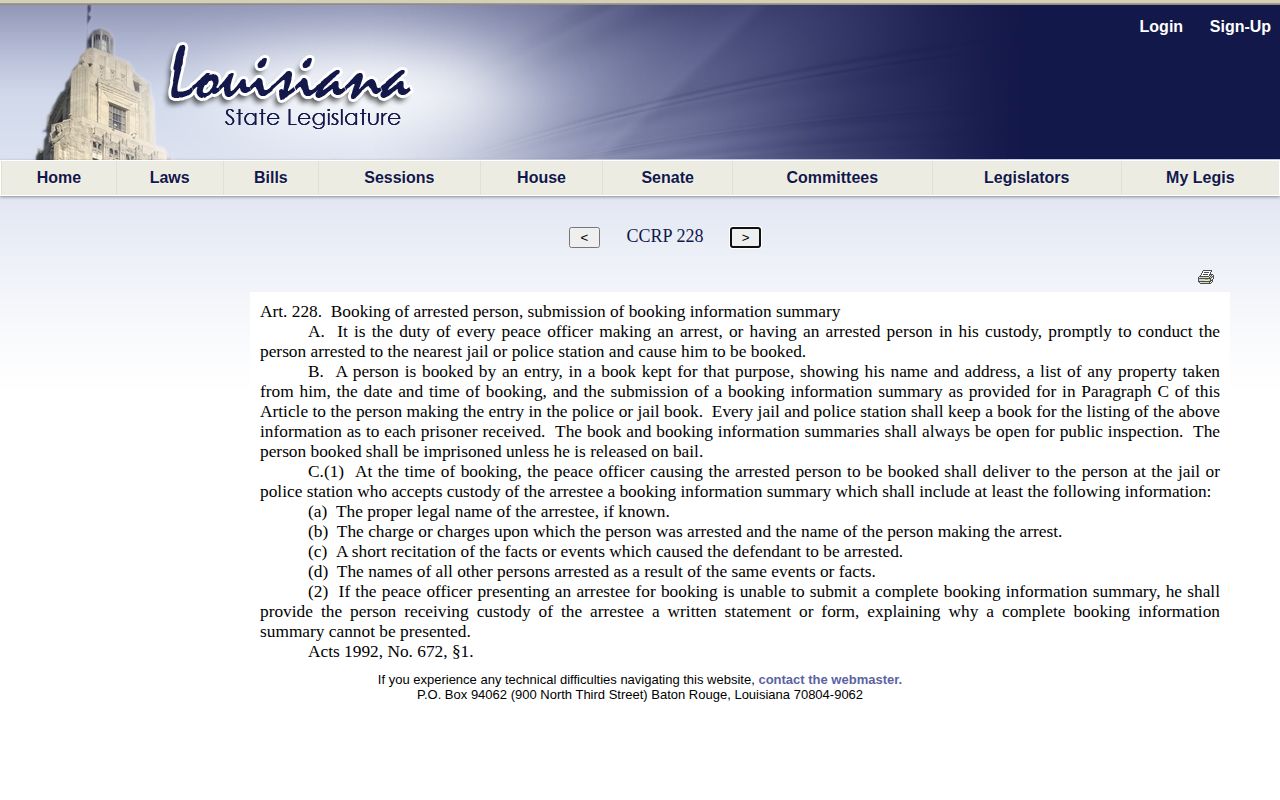
Send your request to the agency that made or holds the record. Name the person if you can. Give a date or booking number. Ask for a specific record that already exists. A custodian will not write a new report for you. Fees, copies, and response times follow each agency's own process. No single statewide fee or deadline applies to every request.
Some parishes add an online layer. The Ascension Parish inmate inquiry is one example. Its official search screen lists a photo field among the record columns. That is a parish example only, not proof that every Louisiana booking record carries a photo.
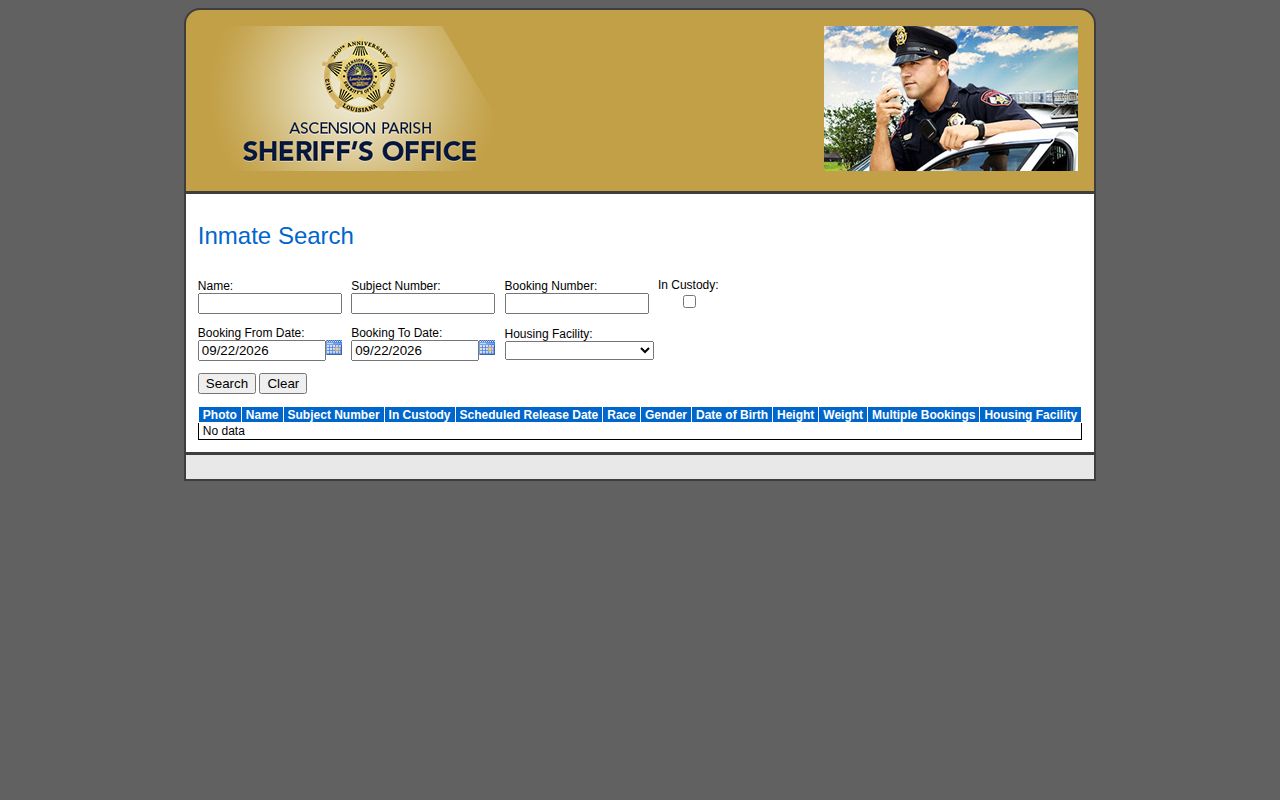
Retention is a separate question from what stays online. R.S. 44:36 sets a minimum three-year period when no approved schedule says otherwise. Schedules and disposal rules still govern. That period is not a promise a photo survives it. Ask the custodian which schedule applies. The custodian can also tell you if a record was transferred or disposed of. See R.S. 44:36. Note: A live custody roster may drop a released person even while the booking agency still holds an older public record.
Louisiana Court Records
A booking charge tells you nothing about how a case ended. Louisiana has no single free statewide criminal docket. Nothing replaces every parish clerk. The Louisiana Clerks' Remote Access Authority runs a statewide link to parish clerk records. Its online portal routes users to participating parish services. Coverage, account needs, fees, date ranges, and documents differ by parish. The statewide clerk association overview describes how that remote-access system works. It connects records kept by parish clerks. The page is an overview, not a criminal case result. It is not a mugshot search either.
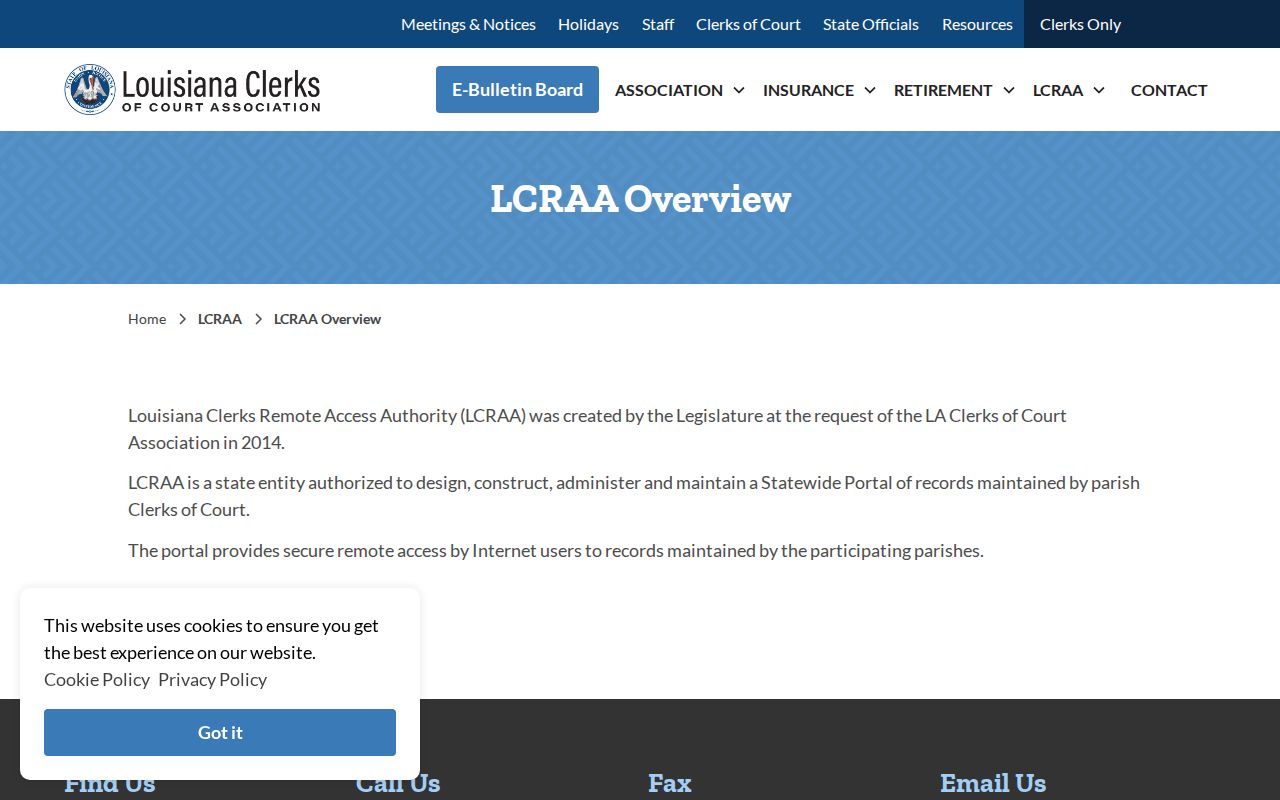
Every parish differs here. Criminal coverage, account needs, fees, and available documents vary by parish. Check the clerk that handled the arrest or prosecution. That clerk holds the final docket and any certified order. A roster's charge field is not a disposition. A blank portal result may mean the parish is not covered. It may also mean the case needs a local search. Note: A court disposition answers how a charge ended, while custody systems answer where a person is held now.
Louisiana Juvenile Records
Juvenile records are not adult booking records with a younger age attached. Children's Code Article 412 generally makes juvenile court matters confidential. Narrow exceptions exist. Authorized disclosures and specific public-safety cases can slip through. The protection reaches past names too. Court, medical, mental-health, school, social, and victim information can each carry separate limits. The Children's Code confidentiality rule governs what may be released.
Louisiana law does allow one narrow public-safety route. Identifying details or a photo of a child wanted for an act juvenile law treats as a felony, or an escaped child, may be disclosed when the statutory conditions are met. That exception does not license a public site to publish juvenile names, case details, or photos.
Other limits can still apply. Think of victim names and contact details, protected witnesses, confidential sources, and undercover officers. Investigative methods, medical information, and records sealed or expunged by court order can also stay closed. R.S. 44:3 protects some of these details, including victims who are children or victims of certain crimes. A custodian may release the public part of a record while withholding the protected part.
Louisiana Mugshot Expungement
In Louisiana, expungement seals a record from public view. It does not destroy it. Articles 971 through 973 cover arrest reports, photographs, fingerprints, dispositions, and related arrest information. Once a judge signs the order, those items become confidential. Agencies still see them. Law-enforcement agencies, prosecutors, courts, and other authorized bodies retain access for the uses the statute allows. The expungement articles draw the line between public removal and physical destruction.
Eligibility turns on how the case ended. It also depends on the person's record since then. An arrest without conviction may qualify where prosecution was barred by the limitation period, where the district attorney declined charges, or where the case ended by dismissal, acquittal, or a successful motion to quash. A motion to quash asks a court to end a charge on a legal ground. Article 976 sets out that no-conviction route. DWI diversion is different. That path carries a five-year wait. A misdemeanor conviction can qualify after a set-aside and dismissal, or more than five years after the sentence, deferred disposition, probation, or parole ends. Listed offenses, disqualifying convictions, and pending felonies can block relief. Some first-offense marijuana matters get a faster 90-day path. Article 977 holds those details.
Felonies face a stricter test. A qualifying felony generally needs a set-aside route or more than ten years after completion of sentence, deferred disposition, probation, or parole. The person must also stay clear of disqualifying convictions during that period and of any pending felony. Violence, sex offenses, and other listed crimes are excluded. Amendments in 2024 allow more than one eligible felony in limited conditions. Article 978 sets that route. A felony arrest that ends in a misdemeanor disposition can use a special interim process without the usual wait. Louisiana also began an automated process in 2025 for certain records with the required disposition data. Neither path guarantees automatic removal.
New document rules now apply to felony filings. Louisiana's 2026 procedure calls for a state or sheriff record check dated within 60 days, district attorney certification, court minutes or a disposition report, and the charging instrument. Article 978.1 lists them. The required set varies by case. The Louisiana State Police Bureau of Criminal Identification and Information posts the current instructions. The petition normally goes through the clerk in the parish where the arrest or conviction occurred. Bring the order, the disposition, and any district attorney certification. Fees have state and local parts, plus caps and waivers. Confirm the current amount with the clerk and the BCII rather than trusting a statewide estimate. The Louisiana State Police expungement page posts current forms and filing guidance.
Louisiana Free Mugshot Removal
Article 234 gives one group a free removal route. That group is private publishers. A person submits a removal request plus evidence of acquittal, no prosecution, or an expunged, vacated, or pardoned charge. A covered remove-for-pay site must then remove and destroy the photo within seven calendar days. It cannot demand a fee. A publisher who charges for a qualifying removal risks prosecution under the extortion law. Someone who sues after a failure may also recover costs, including reasonable attorney fees.
The definition matters here. The statute reaches publications that charge to remove a photo or that mainly publish booking photos for profit or advertising revenue. It does not order every newsroom, public agency, social post, or search engine to erase all mention of an arrest. Send proof to the specific publisher and ask about its current policy. A courtroom win does not erase every copy out there.
The RecentlyBooked Louisiana landing page is one unofficial listing. It is not an agency roster. It is not proof of any court outcome. A publisher's own correction process works separately from Article 234. Check the current instructions for the exact page. Keep a copy of any request you send.
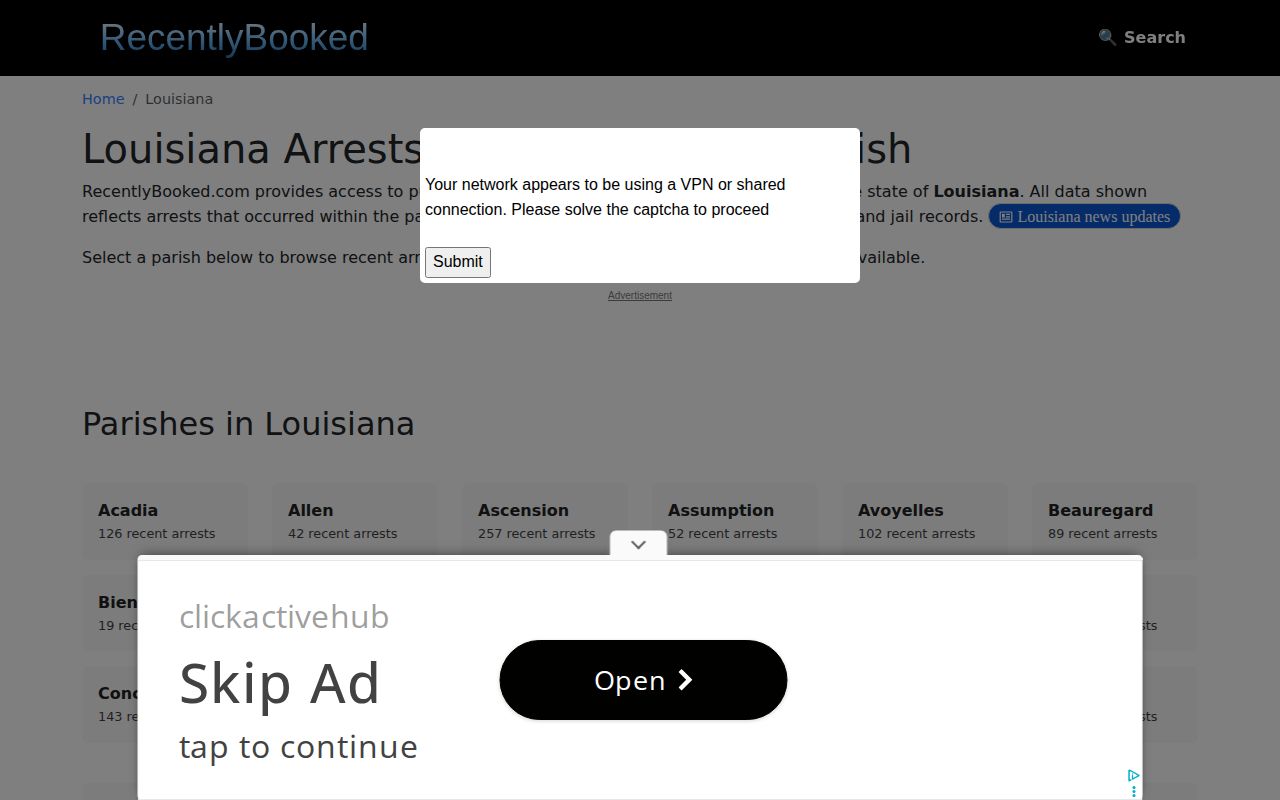
For an agency copy, ask the record-making agency for correction or access. Bring the court disposition or expungement order. For a private copy, use a documented free process where one exists. Save the reply. A search result can outlive its source page. A search-engine refresh is separate work and cannot remove a live page. Match online claims to the docket. Match them to the custodian's reply. The LA DPS&C offender search page covers statewide custody. Parish booking and photo systems run through the Louisiana statewide lookup hub. Note: An expungement order can close public access to an official photo. A separate publisher or cached result needs another request.