
Louisiana Busted Mugshots: Booking
A booking photo is a still image law enforcement takes to identify a person after an arrest. The picture itself is not the record. The arresting agency or the jail holds the full booking file. Louisiana runs no single statewide intake stream. Each parish handles publication its own way. One roster may show a photo, another only name and charge fields, and some parishes offer no recent-booking page at all. A single arrest can also touch more than one system if the person is released, transferred, or later moved into state custody.
Searchers often type "busted mugshots" into a search box. Parish offices describe the same material as a booking record or arrest photo. The wording changes; the source does not. Later case outcomes live in court records, not in a jail photo. Check the court file. Then compare it with what the booking agency reports. That side-by-side view tells you where a case actually stands.
Booking happens long before any verdict. Roster entries and booking photos only mark an arrest, nothing more.
Louisiana Mugshot Law and Access
Louisiana's Public Records Law covers records made or received by a public body, though law-enforcement exceptions still apply. R.S. 44:3 does not force release of every arrest file before a conviction or guilty plea. It does name certain public records. Booking records made public by criminal-procedure law qualify. Article 228 goes further. It opens the booking book or its summary to inspection. Neither rule guarantees a photo in a live roster.
Code of Criminal Procedure article 234 governs how agencies share booking photos and how removal requests reach private publishers. Act 281 of 2024 replaced the prior broad limits with a more permissive framework. Statutory exceptions still apply. Agency-published images must carry a statutory notice. A qualifying publisher covered by the statute must remove and destroy a photo free of charge within seven calendar days of a proper request. Qualifying events include acquittal, no prosecution, expungement, vacatur, or pardon. The statute is not a universal erasure order for every online mention.
Expungement law treats things differently. It removes records from public access rather than destroying them, and it covers arrest reports and photographs held by covered custodians. Uses allowed by law still keep access. News copies and cached search results may need their own correction request, and juvenile records carry stricter privacy rules, so juvenile names and images never belong in a public booking search.
Note: The statute regulates specific agency releases and publisher conduct; it does not promise that every booking image will be online.
Louisiana Busted Photo Removal
Start with the record that proves what happened. That means the court or agency paperwork. Article 234 gives a free request path against a covered remove-for-pay publisher once a qualifying outcome exists. Send proof of the acquittal, no prosecution, expungement, vacatur, or pardon, along with the exact page address. Keep a copy of the request and ask for a written response. Qualifying requests get seven calendar days.
Some publishers also run no-cost correction paths. These cover a wrong person, a duplicate, an outdated record, or a juvenile image. Rules differ and can change. Busted Newspaper and RecentlyBooked publish free request routes. Mugshots.com describes free record maintenance for documented situations it spells out. Mugshots.zone lists a publisher-run removal path. It has not stayed consistently available. Arrests.org posts no clearly stated free opt-out, so do not assume one exists, and a "busted" label on a private page proves no custody or court outcome.
Never pay an intermediary promising removal. Ask the publisher directly, use the court or agency process when needed, and remember that removing one private copy is not the same as expunging the official record.
Expunged Louisiana Booking Photos
Louisiana treats expungement as a sealing step, not a shredding of files. The arrest report, photograph, fingerprints, disposition, and related records come out of public view. Courts and criminal-justice agencies may still keep a confidential copy where the law allows. Copies that escaped the official file can linger elsewhere. A news story or a private repost may still circulate. So can a cached search result or a copy held by another custodian. Each may need its own request to come down.
Which route you use depends on how the case ended and what the offense was. Acquittals, dismissals, quashals, and no-prosecution cases follow one set of rules. Misdemeanor and felony convictions follow others. There are also special paths. One covers an interim felony arrest later resolved as a misdemeanor. Another covers eligible records in the automated process. Many standard routes carry multi-year waits and exclusions. Confirm timing against the current code and the Louisiana State Police instructions rather than guessing. Once an order issues, send a copy to every public custodian. Then ask publishers that hold copies to correct them.
A photo can also vanish from a live roster. The cause may be nothing more than the creating agency's retention schedule running its course. The state's general minimum promises nothing about how long any image stayed posted or even survived. For historical collections and request steps, see the Old Mugshots guide.
Louisiana Busted Mugshots: Record Fields
Article 228 sets out the core fields of a parish booking-book summary. Online rosters can add more. Daily custody management drives those extras, and the mix varies parish by parish. Louisiana's state search sits on a separate layer. LA VINE covers custody and supervision, and its public search route shows no offender-photo field.
| Record field | What it can show |
|---|---|
| Legal name | The booking summary uses the person’s proper legal name; parish portals may add a birth date or other identity details. |
| Charge and arresting person | The booking summary lists the charge and arresting person. A charge remains an charge until the case ends. |
| Event facts | Article 228 calls for a short account of the facts or events connected to the booking. |
| Related arrests | The summary identifies other people arrested from the same event when that information applies. |
| Parish roster fields | Common fields include birth date, sex or gender, race, custody status, booking or arrest date, and sometimes charge, bond, booking number, assigned unit, or arresting agency. |
| LA VINE profile | The state search uses name, location, DPS&C or case identifiers, and custody category; results show custody or supervision details, not a documented public photo field. |
Never treat a blank field as proof of absence. A portal can skip a charge, bond, or image that another office holds in full. The arresting agency keeps the initial report. The parish jail keeps the booking summary. The clerk of court keeps the docket.
What does "released" mean? It means the roster no longer lists the person as current custody, nothing more. The booking record itself may still exist, and release alone says nothing about how the case ended in court.
Request Louisiana Booking Records
A roster may show no photo. It may also drop a person after release. In that case, go to the custodian and ask for the specific record that exists. Give enough detail for the office to find it. Louisiana's copy rules let a custodian charge what the law allows. There is no single statewide fee for every parish and state record. Ask about the current copy method, charge, and response estimate.
- For a parish arrest, identify the arresting agency and likely jail. Start with the relevant parish in the Louisiana Parish Directory, then follow its official roster or records-request route.
- Give the person’s legal name, approximate arrest date, and case or booking number if known. Ask for the booking record or photograph as an existing record, not a new report or legal conclusion.
- For a state-prison record, use DPS&C public-information instructions. State the person’s name or DPS&C number and request a specific record; the department says only limited inmate information is public, and a public photo may not exist.
- If a record is withheld or unavailable, ask which office holds it, whether an exception applies, and which retention schedule covers it. Keep the written reply with the case papers.
R.S. 44:32 governs copies, subject to its exceptions. The Legislative Auditor's public-records FAQ walks through response steps, but the current law and the custodian have the final say. DPS&C posts public-information page directions for written requests. Keep in mind that a parish jail, a state department, and an arresting police department each hold separate files.
R.S. 44:36 sets a retention floor only where no other approved schedule controls. It does not force booking images to stay online for three years. For eligible victims near an incarcerated person's earliest projected release, DPS&C describes a restricted current-photo request. That service is not open to the general public.
Find Louisiana Busted Mugshots by Parish
A statewide search is really a relay. It moves among four keepers: the arresting office, the parish jail, the state custody system, and the court. Start where the arrest likely happened, not on a private image site. City police may make the arrest. A parish facility may do the booking. Another person may walk free before any jail intake happens at all. If a search comes back empty, move on. Try the next custodian rather than reading the gap as proof that no arrest ever occurred.
- Search LA VINE when the person may be in a parish jail, state prison, or on community supervision. Its state search covers custody changes and supervision.
- Use the LCLE parish roster directory to open the official parish roster or jail-management portal. Check that site’s date window, image policy, and search fields.
- If the person is no longer listed, contact the arresting agency or jail for the booking-book record and photo. Give the date, name, and case number, then ask how the office handles access and copies.
- Use the local clerk or eClerksLA to find the case and disposition. A docket can show whether a charge was continued, dismissed, quashed, resolved by plea, or tried.
- For federal custody, check the BOP locator or federal court route. For immigration custody, use ICE’s locator. Neither replaces a Louisiana parish booking search.
The official Louisiana LA VINE person search offers a statewide custody and supervision form. Its scope differs from parish rosters, which can carry local booking detail.

Use the returned location and status to pick the next source; this is no statewide booking-photo archive. The DPS&C inmate-information page routes the public to LA VINE for state custody.
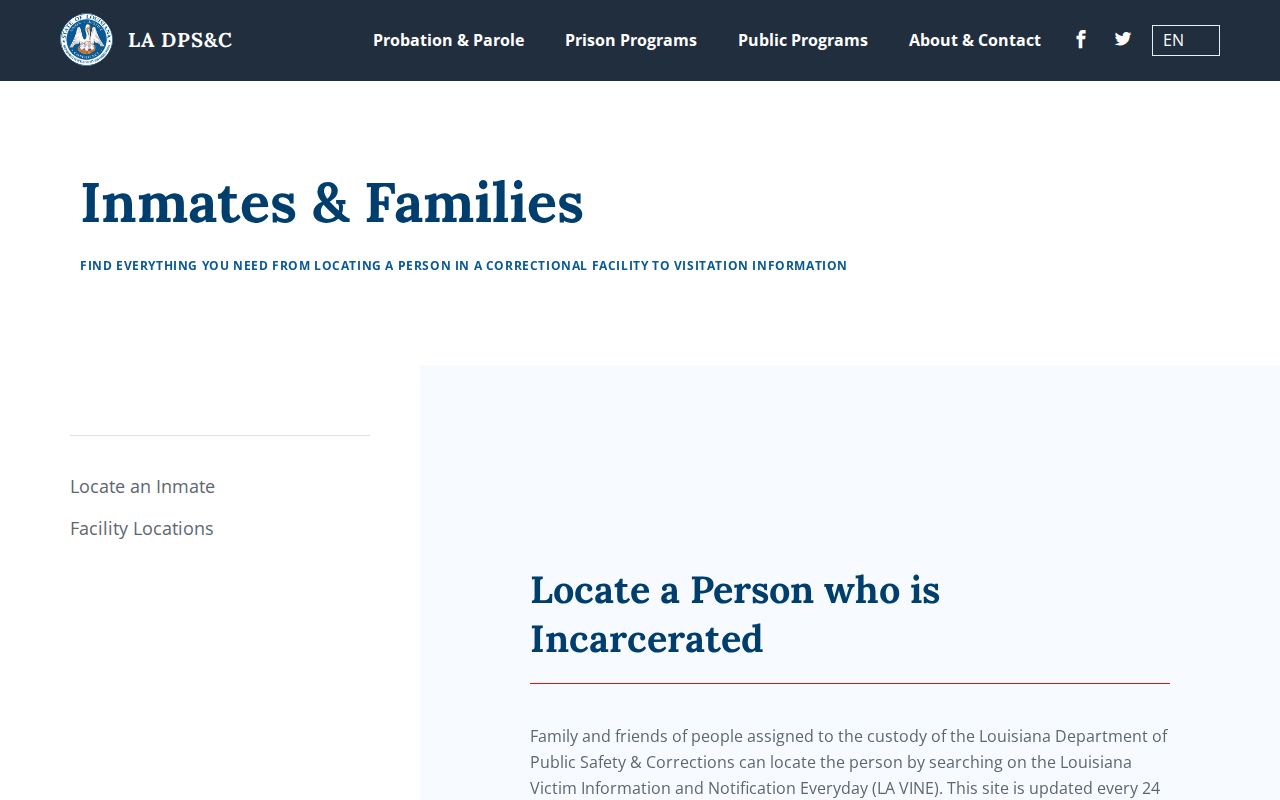
A state route pays off when the person sits in state custody or supervision. A fresh parish arrest still belongs to the local custodian.
How Louisiana Busted Mugshots Vary
Louisiana's statewide roster directory is a routing page rather than one big jail database. The Louisiana Commission on Law Enforcement describes the live roster pages as redeployed from jail-management systems. Refreshes run on an interval of roughly 30 minutes. Each parish decides which fields, photos, and booking dates to show. A live custody list tells you who is held now. It does not say who was arrested last month. Nor does it show how any case resolved in court.
Two patterns dominate the parish roll-up. Rural parishes often run a basic LA VINE-style view. It lists name, booking date, and custody status for each person. Public photos are frequently absent. Higher-volume systems tend toward search portals. Such portals can surface a booking number, agency, assigned unit, charges, or an image on a detail page. Neither pattern says anything about regional arrest rates or a legal right to a photo.
The Ascension Parish Sheriff's inmate inquiry shows one parish portal with a photo-capable detail view. It stands for itself, not for a feature every Louisiana parish provides.
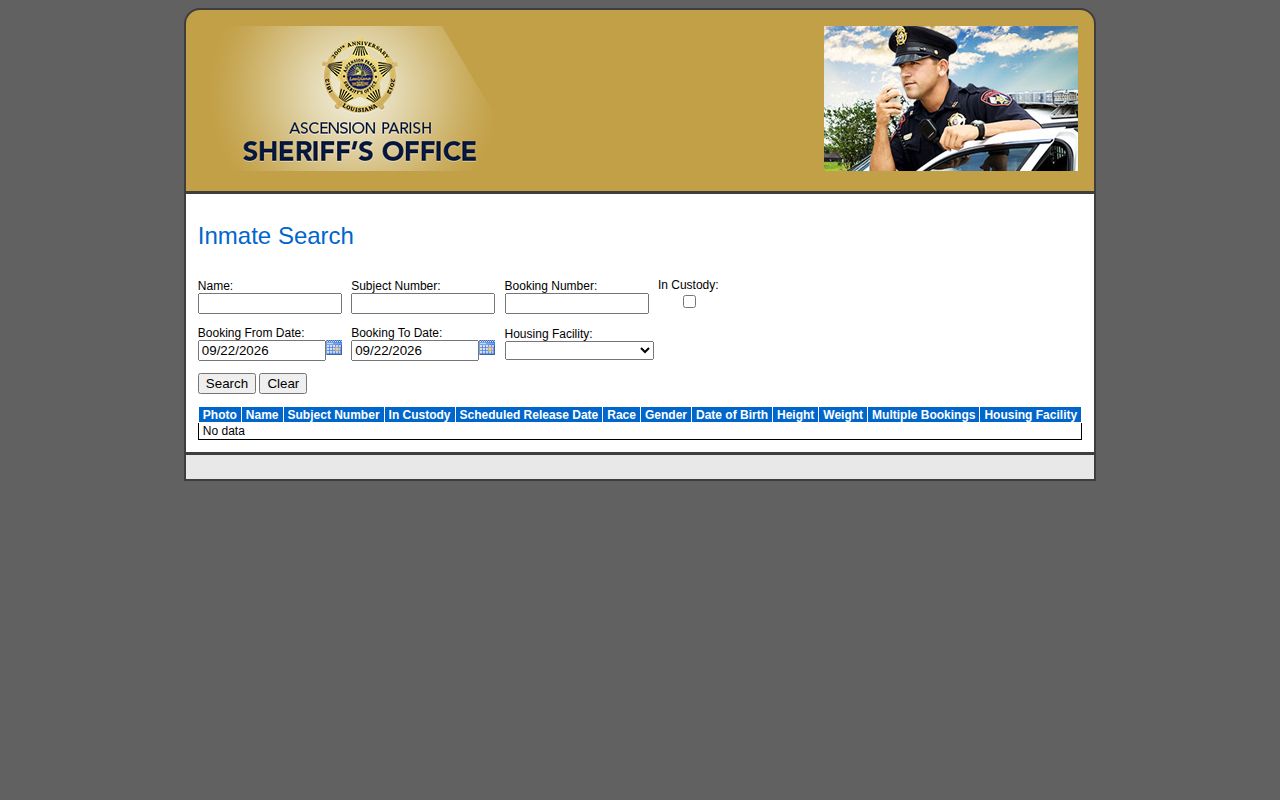
Always check the date and status on a parish result. The jail may have taken an intake photo, yet the field sits blank or vanishes later.
Note: A parish roster’s update time describes that system, not how quickly every arrest reaches the public record.
Louisiana Booking Feeds Vary
Louisiana has no single definition of a recent arrest. A live parish roster may list only people still in custody. A booking feed can keep entries after release. Sheriff apps and parish release pages sometimes cover an even narrower slice of events. Some agencies skip the search feed altogether. They post a dated report or weekly list instead. The window behind those lists varies too. It might be a single day, a full week, or simply unstated. The Cameron Parish Sheriff's Office app is one local example, not a statewide rule.
Update speeds differ just as much. LA VINE describes its custody data as refreshed every 24 hours. The LCLE live-roster directory cites roughly 30 minutes for connected rosters. Those layers measure different things. Neither one promises a new arrest photo goes statewide that fast. Parishes follow their own schedules, and some update only when a release list is prepared.
The Cameron Parish Sheriff's Office app listing shows one documented mobile route for local information. It does not set policy for any other parish.
A third-party option also exists. RecentlyBooked Louisiana advertises parish coverage and a rolling recent window. Its results are publisher copies rather than the official jail feed.
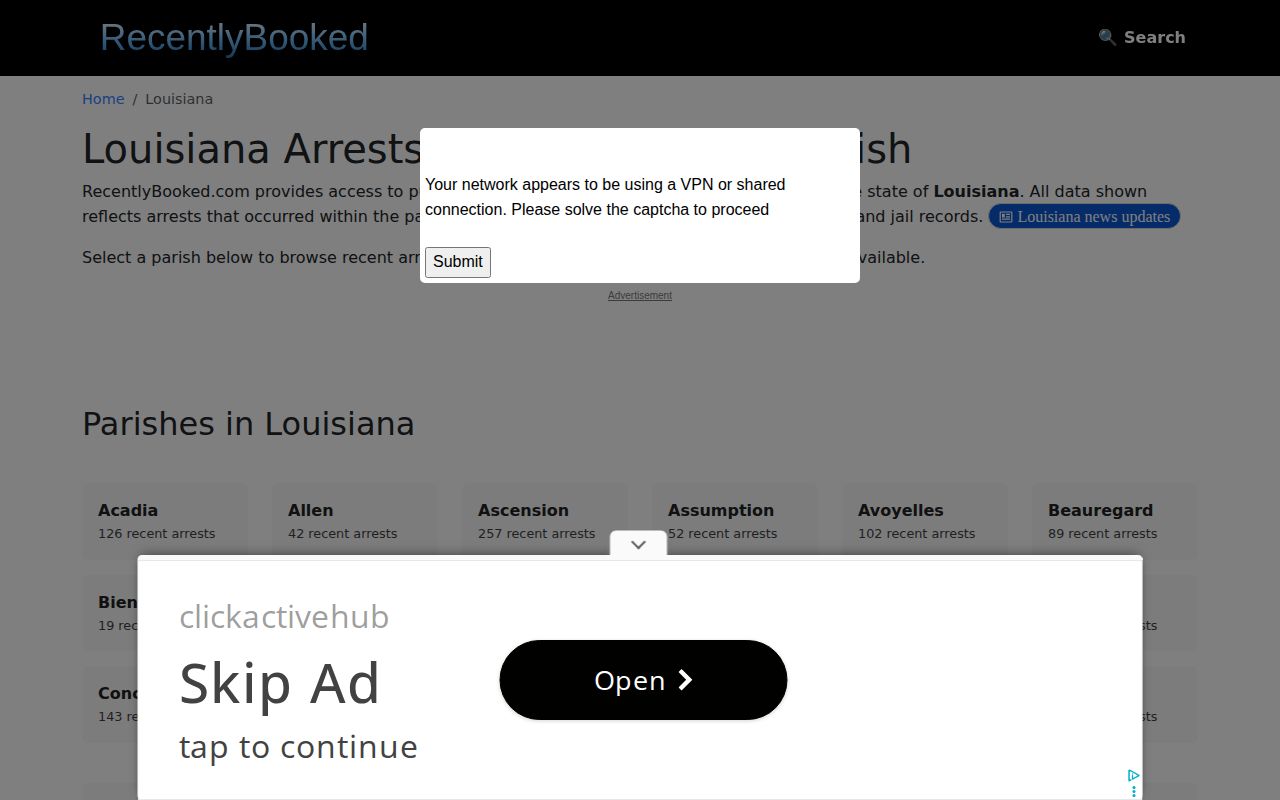
Treat a publisher's date or name as a lead only. Before relying on it, confirm custody and outcome with the parish or the court.
Louisiana Custody Alerts and Photos
LA VINE sends free, anonymous alerts when custody status changes. An alert can tell you someone entered or left a covered facility. That is all it does. It is not a court result, and it builds no public photo archive. The statewide search, the parish roster directory, and victim services each handle separate jobs.
One narrow photo route exists for victims. The DPS&C victim-services page describes a current-photo request. An eligible victim can ask near the earliest projected release date of a person in prison. That path sits apart from LA VINE. It does not open a prison file to the public.
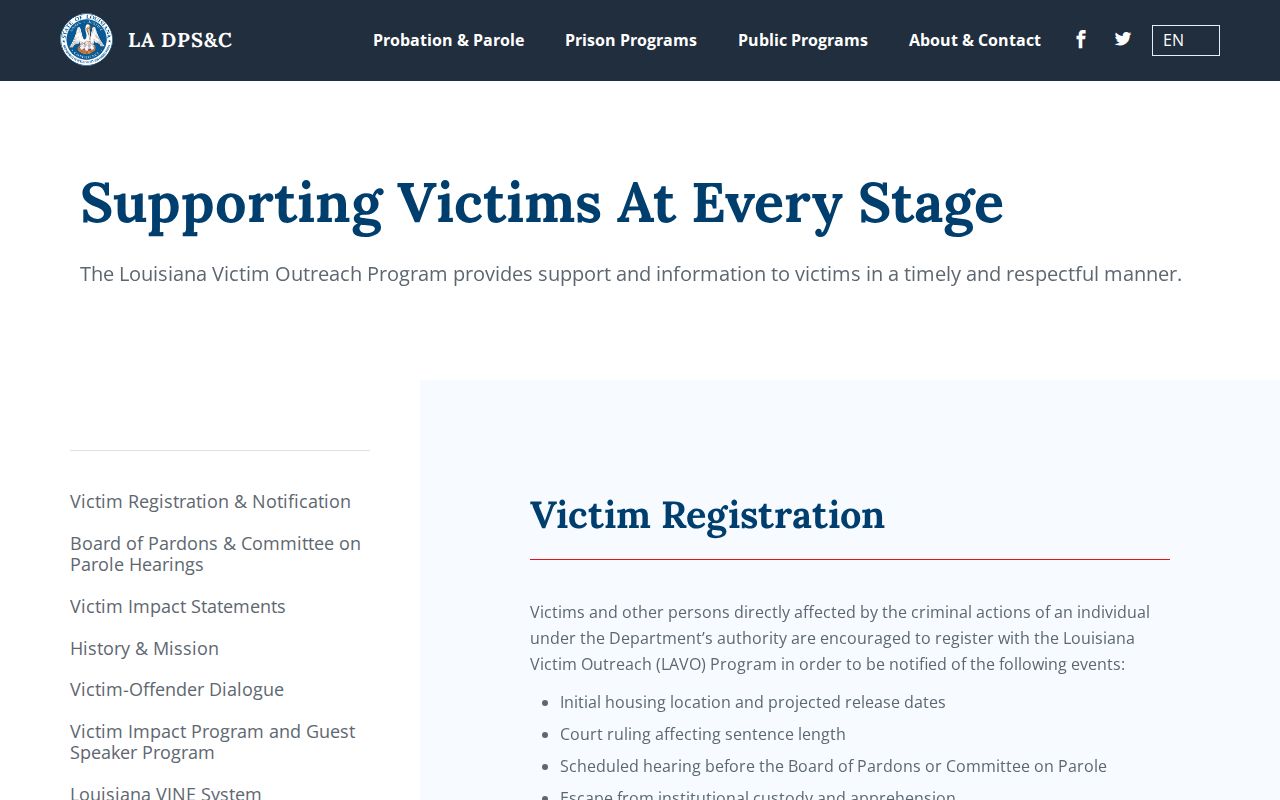
Want a parish booking photo? Ask the arresting agency or the local jail that holds the person. A state custody service cannot stand in for that local arrest record.
Note: A custody alert reports a status change; it does not say whether a charge was proved in court.
Louisiana Busted Mugshots and Court Outcomes
Court records tell a different story than a booking list. Louisiana has no free statewide criminal docket that stands in for each parish clerk. Two portals help fill the gap. The Clerks' Remote Access Authority and eClerksLA link users to participating parish services, yet coverage, fees, and account rules differ from parish to parish. Some cases simply will not appear. When that happens, call the clerk in the parish where the charge was filed. The LCRAA overview breaks down how the statewide clerk-access system works. Follow the parish link from there and read the clerk's search terms.
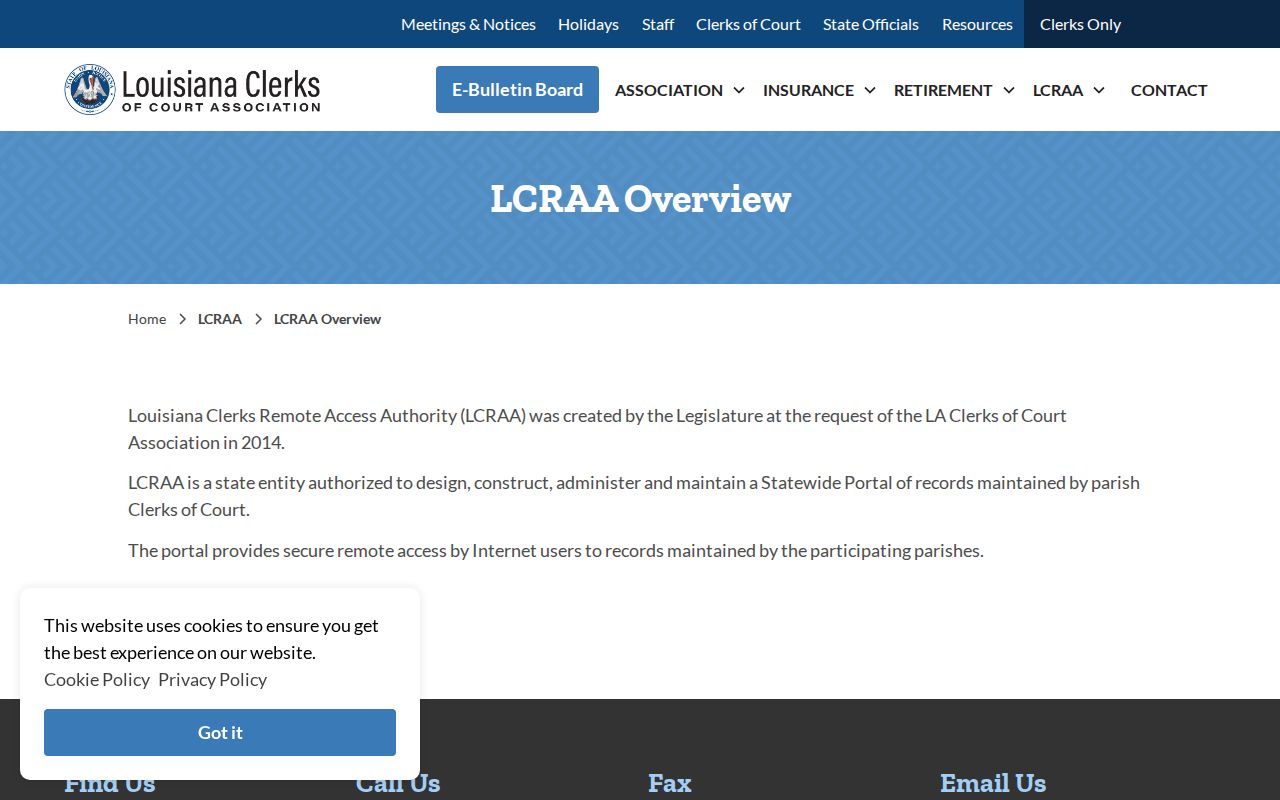
The clerk's file, not the booking charge field, holds the later docket events and outcomes. Sealed or expunged records may stay out of public view entirely.
- Booking
- The intake record made after a person enters an agency’s custody.
- Arraignment
- An early court hearing where the charge is addressed.
- Bond
- A court-set condition that may allow release while a case is pending.
- Disposition
- The formal result recorded in the court case.
- Expungement
- Removal of covered records from public access, not necessarily destruction.
Where the Booking Photo Lives
Custody stage decides which record system to check. Parish jail rosters cover local custody, the arresting agency keeps its own arrest records, and the state search tracks state custody and supervision. A transfer can pull a person from one portal and pop them into another. When status is unclear, ask the receiving agency.
| Situation | Best record path | What to expect |
|---|---|---|
| New parish booking | Arresting agency, parish roster, or dated booking feed | Current status and basic booking fields; photo availability differs by parish. |
| Released from parish custody | Booking-record request to the agency or jail | The person may leave the live roster while the booking record remains with the custodian. |
| State prison or supervision | LA VINE through DPS&C | Custody or supervision details; the reviewed public profile did not show a photo field. |
| Federal custody | BOP locator or federal court route | Federal location and status, with no public photo field in the BOP locator. |
| Immigration detention | ICE locator | Current ICE or CBP detention search, with no public photo field documented here. |
For a federal custody check, start with the Federal Bureau of Prisons locator, which covers federal inmates from roughly 1982 to the present. It serves one narrow purpose. A parish arrest record or a public booking photo falls outside what it shows.
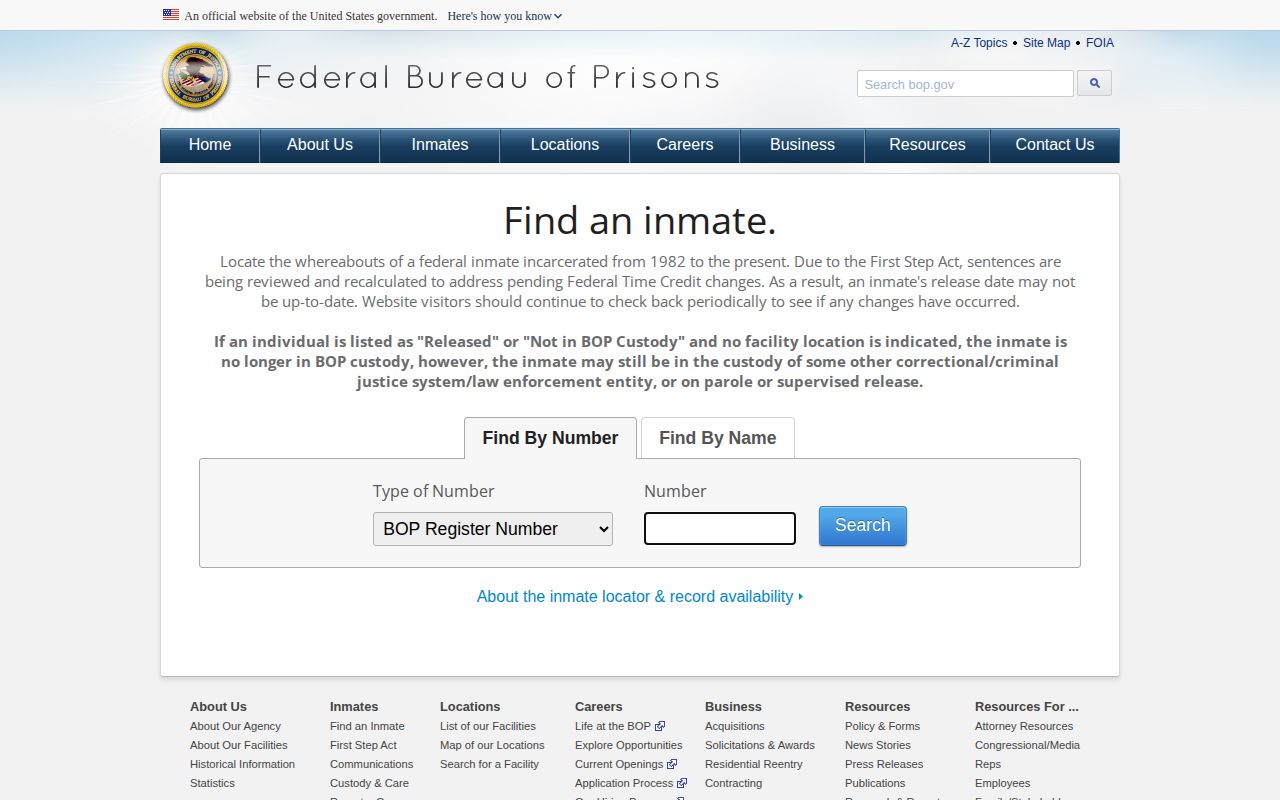
One gap matters here. Federal detainees held before trial often do not appear in BOP results, so that question goes through the proper federal court or the U.S. Marshals.
Busted in Louisiana: Warrant Checks
Wanted-person searches in Louisiana run agency by agency. DPS&C posts current wanted and warrant-case material. The Attorney General's Fugitive Apprehension Unit works alongside local, state, and federal partners. U.S. Marshals districts publish selected federal profiles. No single source lists every parish warrant, so a personal warrant question belongs with the issuing court or the law-enforcement office that holds the record. Never approach anyone named on a list. A wanted notice can be old, incomplete, or built on thin information, and the safe move is an official tip route.
Need a starting point? The Most Wanted Fugitives guide gathers current agency lists and walks through safe warrant-check steps.
Secondary Louisiana Mugshot Pages
Private sites republish Louisiana booking photos without holding the records themselves. A copy can sit stale for months. Names get mismatched. The photo may even belong to an older arrest entirely. Treat these pages as leads. Confirm the person, the date, and the arresting agency against the parish roster or records unit before acting.
Coverage varies by publisher too. Mugshots.com keeps a deep but uneven historical archive for Louisiana. Mugshots.zone covers only part of the state. Each portal runs its own correction rules. The main stops are Mugshots.com Louisiana, Busted Newspaper, Arrests.org, and RecentlyBooked. Busted Newspaper and RecentlyBooked publish free routes, and Mugshots.com applies a no-cost record-maintenance policy. Arrests.org states no clear free opt-out. As a secondary path, Mugshots.zone's Louisiana landing route covers some parishes but not all.
Cite the exact page address and attach official proof. Skip paid middlemen, since article 234 gives a free path in qualifying cases.
A news story is not the booking feed either. Louisiana outlets like The Advocate, NOLA.com, WWL-TV, WAFB, WBRZ, WVUE, KPLC, KSLA, KALB, KNOE, and Louisiana Illuminator cover selected arrests and court cases. Reports often print an agency-released photo. Still, a story never replaces the parish roster. Send the newsroom a documented correction or the later case result.
Louisiana Busted Mugshots by Parish
Louisiana divides into parishes, not counties. A booking can start with city police, a sheriff, a jail, or another agency. Some city arrests go straight to parish intake. Others end in a summons, a quick release, or a transfer. The parish site helps, but it may not be the only office holding a record.
Pick the parish where the arrest happened. Follow its official search and request links from there. The directory lists every parish site and its seat. When the parish jail shows no entry but a city department made the arrest, contact that department directly. Never assume a person was booked where they live.
The statewide path stays simple: name the arresting agency, check the local roster or dated feed, request the booking record if needed, and let the clerk settle the case outcome. For state custody, switch to LA VINE. Federal or immigration custody points to a different locator.